
How to Choose the Best Garage Door Opener for Your Home
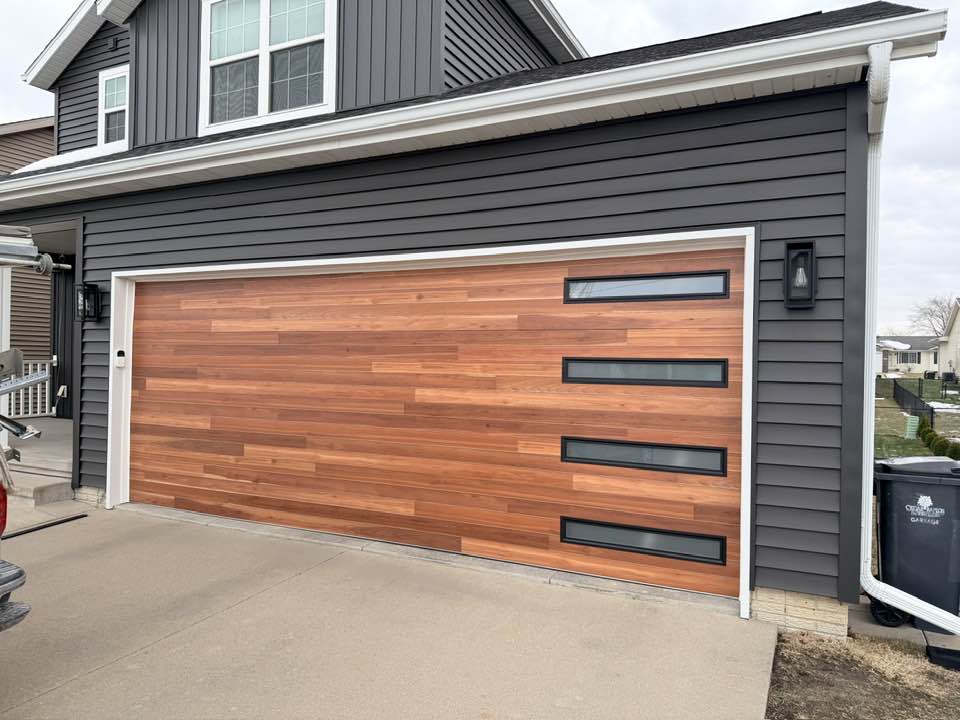
For most homes with an attached garage, a belt drive garage door opener is the best choice because it runs quiet and won’t vibrate the floor above it.
If you have a detached shop or a heavy wooden door, go with a chain drive since it costs less and handles the weight better. And if you have high ceilings or want to save space, look at a wall-mount jackshaft opener. That is the gist of it.
But obviously, it gets a bit more complicated when you start looking at horsepower and smart features. Or even just trying to figure out why one box costs two hundred bucks and the other costs five hundred.
I’ve been around enough garages to know that buying the wrong one is a headache you don’t need.
The Noise Factor Is a Big Deal
I cannot stress this enough. The noise level of your opener changes how you live in your house. If your garage is right under a bedroom or next to a living room, a chain drive opener is going to drive you crazy. It just is. It works by pulling a metal chain along a metal track. Metal on metal. It rattles. It clanks.
This is why everyone is moving toward belt drive units. Instead of a chain, they use a steel-reinforced rubber belt. It is incredibly smooth. You press the button and the door just glides up. No clanking. Brands like LiftMaster and Chamberlain have really perfected this tech. I remember installing a belt drive for a friend last year and we actually thought it wasn’t working at first because we couldn’t hear the motor grinding. It was that quiet.
There is also the screw drive option. It uses a threaded steel rod. It used to be the middle ground for noise, but honestly? It’s not my favorite. They can be sensitive to temperature swings, and living in a place like Cedar Rapids where it freezes hard in winter, that can be a problem. The grease on the rod gets gummy in the cold. I’d stick to belt or chain mostly.
Understanding the Different Drive Types
So we talked about noise, but let’s break down the mechanics a bit more. You have your chain drives. These are the workhorses. If you have a massive, heavy wooden door that weighs a ton, a chain drive is trustworthy. It’s loud & strong. They are usually the cheapest option at places like Home Depot or Lowe’s.
Then you have the belt drives we mentioned. They cost a little more. Maybe $50 to $100 more depending on the model. But for that extra cash, you get silence and usually a slightly faster opening speed. Most residential homes really should just use belts these days.
Then there is the jackshaft. This is the cool one. It mounts on the wall beside the door instead of hanging from the ceiling. It frees up all that overhead space. If you want to store a canoe in the rafters or if you have a high-lift door, this is the only way to go. It connects directly to the torsion bar. It is super quiet and looks very clean. But yeah, it costs more.
Horsepower Ratings Are Confusing
You look at the box and it says 1/2 HP or 1.25 HPS. What does that even mean for you? Most standard aluminum or steel garage doors only need a 1/2 horsepower motor. That is plenty. The springs do the heavy lifting, the opener just gets the momentum going.
If you have a heavy insulated door or a one-piece wood door, you might want to bump that up to 3/4 HP or higher. It just puts less strain on the motor over time. I think people often overbuy on horsepower though. They think more power means it opens faster. It usually doesn’t. It just means it won’t burn out as fast if the door is heavy.
Also, pay attention to AC vs DC motors. DC motors are becoming standard because they allow for soft-start and soft-stop. The door ramps up speed slowly and slows down before hitting the floor. It saves a lot of wear and tear on the door hardware. Plus DC motors can have battery backups. AC motors usually don’t accomodate battery backups easily. That is a spelling mistake but you get the point. It’s important.
Basically, if you can afford it, get a DC motor with at least 3/4 HP equivalent strength. It covers almost all bases.
Smart Features You Actually Need
I used to think smart home stuff was a gimmick. Who needs to open their garage with a phone? Turns out, I do. And you probably do too. Almost every decent garage door opener now comes with WiFi built-in. The most common platform is MyQ, which LiftMaster and Chamberlain use.
Here is why it matters. Have you ever driven away and panicked because you couldn’t remember if you closed the door? With the app, you just check. If it’s open, you tap a button and close it. Peace of mind.
Some of the newer models even have built-in cameras. Genie and others are doing this too. It lets you see who is coming and going. Amazon Key integration is another big one. The delivery driver can drop a package inside your garage so it doesn’t get stolen off the porch. You might not use it every day, but when you need it, it is awesome.
Just make sure your WiFi signal actually reaches the garage. That is the number one complaint I hear. “The smart features don’t work.” Well, yeah, your router is in the basement on the other side of the house.
The Iowa Weather Factor
Living in the Midwest means dealing with cold. Bitter cold. And storms. This brings me to a feature that isn’t really optional around here. Battery Backup.
California made it a law that all new openers must have backup batteries. But in Iowa, it’s just common sense. When a summer storm knocks out the power, or an ice storm hits, getting your car out of the garage can be a nightmare if the opener is dead. Sure, you can pull the red emergency release cord. But have you ever tried to lift a double-wide garage door manually? It is heavy. Especially if the springs are a few years old.
A battery backup kicks in automatically when the power dies. You might get 10 or 20 cycles out of it. Enough to get to work and back. Brands like Craftsman and others include this in their higher-end models. Don’t cheap out and skip this. You will regret it the first time the lights go out.
Also, check the operating temperature range. Some electronics get glitchy when it’s twenty below zero. Stick to major brands that test for this.
Security Is More Than Just a Code
Old openers used to be easy to hack. Thieves could just drive by with a code grabber. Modern openers use “rolling code” technology. Every time you press the remote, the code changes. There are billions of combinations. It is much safer.
Another security feature I really like on the wall-mount jackshaft models is the automatic deadbolt. When the door closes, a physical heavy-duty deadbolt slides into the track. You can hear it click. It makes it nearly impossible to force the door open from the outside.
If you are getting a standard rail opener, look for “posilock” features that electronically lock the door down when it’s closed. Security isn’t just about keeping people out of the garage. It’s about keeping them out of your house if you have an attached door.
Don’t forget the sensors. The little eyes at the bottom of the door. They are mandated by law for safety, but they also get knocked out of alignment easily. Make sure the opener you pick has easy-to-adjust sensors with clear LED indicators.
Installation and Cost Realities
Can you install a garage door opener yourself? Maybe. If you are handy & have a free Saturday. But it is not as easy as YouTube makes it look. You are working on a ladder, holding a heavy motor unit above your head. The rail assembly can be tricky.
If you hire a pro, you are paying for the expertise to get the limits set right. If the opener pushes the door down too hard, the rail bows. If it doesn’t push hard enough, the wind blows it open. It’s a balance.
Price-wise, you get what you pay for. A cheap chain drive might cost $150. It will be loud and basic. A good belt drive with WiFi and battery backup will run you $300 to $450 for the unit itself. Installation adds to that. The wall-mount units are pricier, usually starting around $500 or $600.
Is it worth spending the extra money? For something you use every single day, multiple times a day? Yes. I think so.
The Bottom Line
Choosing a garage door opener feels like a boring chore, I know. It’s just a box that lifts a door. But getting the right one makes your home feel more solid. If I were buying one today for my own house here in Cedar Rapids, I’d buy a belt drive with a DC motor, battery backup, and built-in WiFi.
It’s quiet enough that I won’t wake the family when I come home late. It works when the power is out. And I can check if I left it open from my phone. That covers all the bases. Just stay away from the super cheap builder-grade models unless you enjoy the sound of chains rattling against metal.
Take a look at your garage setup, decide if you need the wall space or the silence, and pick a reliable brand. It’s an investment that lasts 15 years if you do it right.