
Garage Door Problems in Cold Weather and What You Can Safely Check
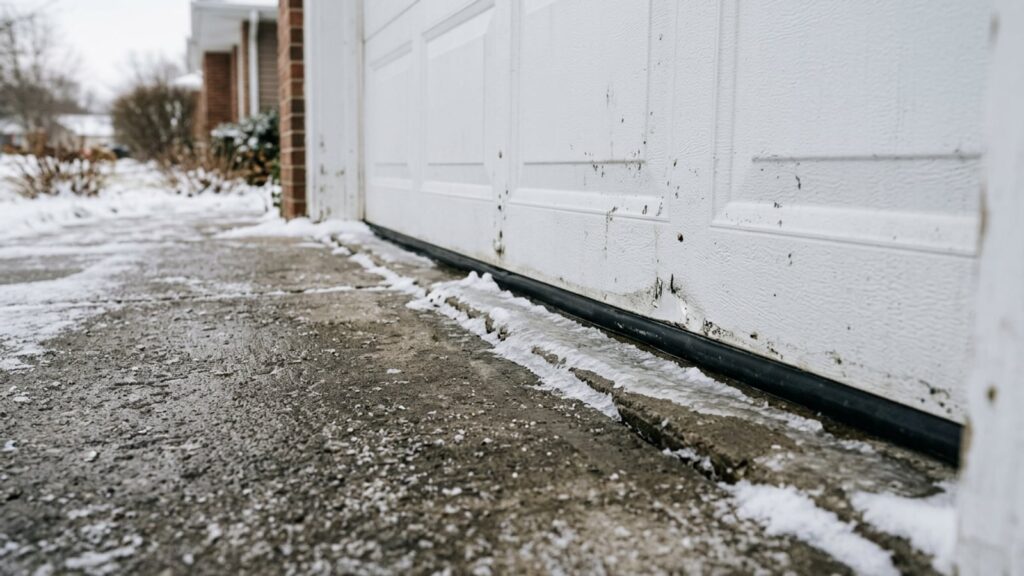
Many garage door problems in cold weather come from a short list of causes: ice or snow at the threshold, metal parts that contract, snow around the safety sensors, and remote batteries that drain faster in the cold. A homeowner can safely check all of these. Repairs to springs and cables, and any balance adjustment, are jobs for a trained technician.
Knowing which garage door problems in cold weather you can handle yourself matters in Cedar Rapids and across eastern Iowa, where freezing temperatures and snow buildup are a normal part of winter. Here is what to check, and where to stop.
What causes garage door problems in cold weather
Genie, a maker of garage door openers, notes in its winter maintenance tips that metal parts contract in the cold, which can leave hinges squeaking, tracks out of line and the door slow to move. It also warns that ice and snow building up under the door can freeze it to the ground or stop it from closing all the way, and that this can damage both the door and the opener.
Genie suggests checking the cables, rollers and hinges for wear, then lubricating moving parts as needed with a light silicone-based grease, so the opener is not straining against dry rollers. Unplug the opener first, which Genie advises before any maintenance on the door or opener. Look at the cables, but do not touch them.
How to free a garage door frozen to the ground
If the door will not budge, stop pressing the button. Repeated tries against a frozen seal can damage the door and the opener, so unplug the opener before you work on the door.
Then loosen the seal gently. Chip the ice away along the bottom edge with a plastic scraper and avoid metal tools or hard prying, which can tear the rubber. Once the door is free, clear the loose ice and water from the threshold so it cannot refreeze under the seal.
Genie recommends keeping the area where the seal meets the floor clear of snow and debris, with a broom and a shovel close by. Sweeping out the slush that drips off your car in the evening helps keep it from freezing along the threshold overnight.
Clear snow away from the safety sensors
If your garage door won’t close in cold weather and reverses on the way down, look at the safety sensors first. Chamberlain, another opener maker, lists sensor alignment as a common cause of garage doors not closing. The U.S. Consumer Product Safety Commission (CPSC) says in its garage door opener safety sheet that an electric eye should be installed 4 to 6 inches above the floor, which is right where drifting snow or a shoveled pile can block the beam.
Brush the snow and ice away from both sensors and wipe the lenses with a soft cloth, as Genie suggests. Check that the two sensors still face each other squarely, since a knock from a shovel or snow blower can push a bracket out of line. Look over the sensor wiring for damage too.
Why turning up the opener force is the wrong fix
The most tempting fix for garage door problems in cold weather is also a risky one: turning up the opener’s force setting so the door pushes harder. Chamberlain’s support guide warns never to use force adjustments to make up for a binding or sticking door, and says too much force interferes with the safety reversal system. That system is what makes a closing door reverse instead of trapping someone underneath. The CPSC says a door that binds or sticks should be serviced by a professional.
You can test the reversal yourself. The CPSC advises placing a 2×4 on the floor in the door’s path and, if the door does not reverse when it strikes the board, disengaging the opener until it has been adjusted, repaired or replaced. It also recommends inspecting the door and the opener every 30 days.
Replace remote and keypad batteries early
A remote that only works up close, or whose indicator light no longer comes on, usually needs new batteries. Genie notes that cold weather can drain batteries quicker, and that an outdoor keypad’s batteries drain faster because the keypad sits out in the cold. It suggests replacing remote batteries as needed or at least every 2 to 3 years, without waiting for them to die.
If the wall button runs the door but the remote does not, the remote is the likely cause. If nothing works, check that the opener has power.
Check the balance, then leave springs and cables to a technician
DASMA, the North American trade association for garage door and opener manufacturers, says in its garage door safety tips that a door that does not go up and down smoothly may signal an unsafe condition. If the awkward movement continues when the door is operated by hand, the spring system may be out of balance.
Before you check the balance yourself, look for a broken spring or a frayed cable. If you see either, leave the door closed and call for repair, since the CPSC warns that a severely unbalanced door could crash to the floor.
Otherwise, with the door fully closed, pull the opener’s emergency release, which Genie says should never be pulled with the door open. Lift the door by its handle about 3 to 4 feet, keeping your fingers out of the joints between the sections as DASMA advises, then let go with your feet clear of the door. A balanced door moves very slowly or stays put, while a door that drops or rises is out of balance. Lower it by hand and reconnect the opener as its manual describes.
If the door is out of balance, the fix is not a DIY job. DASMA says spring systems should be repaired only by trained professionals, and that the cables should be replaced only by a trained technician because of the high spring tension. The bottom brackets are under extreme tension too, and Genie refers balance adjustments to a professional dealer.
What a pre-winter tune-up covers
DASMA advises monthly safety checks at home and says a yearly visit from a trained door systems technician helps keep a door running safely and smoothly. For most homes in eastern Iowa we recommend a professional tune-up once a year, and a check before winter is especially worthwhile, so the door is ready for freezing temperatures and snow buildup.
On a maintenance visit, our technicians tighten the hinges, roller brackets and other hardware, lubricate the tracks and rollers, set the spring tension so the door is balanced and test the safety sensors. They also check the cables and panels for early signs of wear. That covers the spring and cable work you should never take on yourself.
If you are already dealing with garage door problems in cold weather, such as a door that sticks, reverses or will not close, a technician can find the cause before it turns into a broken part. For garage door repair in Cedar Rapids, Iowa City, Marion, North Liberty or Tiffin, see how our repair service works.